01
Building Airflow and Ventilation Studies
Assess airflow in selected rooms, corridors and building areas. CFD can help identify uneven airflow distribution, low-velocity regions and potential recirculation zones.
HyperCurve provides CFD analysis services in Delhi to help engineering teams investigate fluid flow, airflow behaviour, pressure distribution and heat transfer through computational simulations. CFD can provide useful insights during design review, troubleshooting and performance evaluation.
Our CFD services in Delhi may be tailored to building ventilation, HVAC systems, industrial equipment, thermal management and external-flow applications. Each study is scoped around the engineering problem, geometry and operating information available.
CFD Fundamentals
Computational Fluid Dynamics (CFD) refers to computer-based numerical simulations that help engineers study fluid motion and related physical effects such as pressure, velocity and temperature. A CFD model allows airflow, fluid movement, heat transfer and recirculation zones to be investigated within a defined geometry.
CFD can be useful when physical testing is expensive, difficult or insufficient for understanding a system. However, simulation quality depends on geometry, meshing, boundary conditions and physical modelling. Appropriate validation should be considered where required by the application. HyperCurve's CFD analysis services at Delhi are scoped around the engineering problem and available project information.
Engineering Capabilities
Each simulation is planned around the engineering question, available project inputs and intended use of the results. Explore the applications that may be suitable for your project.
Assess airflow in selected rooms, corridors and building areas. CFD can help identify uneven airflow distribution, low-velocity regions and potential recirculation zones.
Analyse supply-air distribution, temperature variations and airflow interaction in conditioned spaces to support the review of diffuser locations and HVAC design concepts.
Investigate heat transfer and temperature gradients around equipment and within selected spaces. Simulation results can help identify potential hotspots and compare cooling arrangements.
Examine fluid flow through ducts, channels, equipment and selected process geometries where pressure drop, velocity profiles or flow uniformity influence engineering performance.
Simulate airflow around buildings, structures and machinery where external-flow behaviour is relevant. Studies may investigate flow separation, wake regions and velocity variations.
Study airflow and thermal conditions around server racks, cooling systems and room configurations. Where suitable project data is available, CFD can help investigate hotspots, recirculation and bypass airflow.
Compare selected design options or operating scenarios under consistent assumptions. Results can help stakeholders evaluate performance indicators and identify options for further engineering investigation.
Project-Focused Approach
A useful CFD study is built around the right engineering question, not simply a simulation run. Working with CFD consultants in Delhi can help project teams define what needs to be investigated, understand which inputs are required and choose an appropriate modelling scope.
01
Define the engineering question and identify the decisions the CFD study is expected to support before modelling begins.
02
Review geometry, material properties and available operating data to identify the information needed for a suitable simulation setup.
03
Select relevant physical models and boundary conditions according to the application and the available project information.
04
Interpret velocity, pressure and temperature distributions in the context of the design problem being investigated.
05
Evaluate defined design alternatives under consistent assumptions to help inform engineering reviews and decisions.
06
Document the modelling approach, assumptions, findings and limitations so the results can be reviewed in context.
Applications
CFD can support design and operational investigations across the built environment and industrial engineering. The modelling strategy depends on the physical problem, geometry and intended use of the results.
Airflow distribution, ventilation behaviour and indoor air movement in selected building spaces.
Supply-air distribution, temperature variations and airflow interaction in conditioned environments.
Flow distribution, pressure behaviour and fluid movement around selected equipment and process geometries.
Airflow and thermal patterns around racks, cooling equipment and server-room layouts.
Selected external-flow, internal-flow and thermal studies for appropriate engineering applications.
Airflow pattern and temperature distribution assessment where project requirements and available data support the study.
Our Workflow
A structured workflow helps establish the simulation objectives, prepare the model, evaluate the numerical solution and communicate findings according to the agreed engineering requirements.
01
Discuss the engineering question, project objectives, operating scenarios and intended use of the simulation results.
02
Examine available CAD geometry, drawings, dimensions, material information and operating conditions. Identify important data gaps before modelling.
03
Prepare or simplify the geometry where appropriate, establish the computational domain and create a mesh suitable for the study.
04
Define relevant physical models, material properties, inlet and outlet conditions, heat loads and other boundary conditions.
05
Review convergence and solution behaviour, then evaluate flow, pressure and thermal outputs relevant to the defined engineering problem.
06
Organise relevant results into visualisations and technical explanations that support design review and next-step engineering decisions.
Simulation Platforms
Software selection depends on the physics, geometry, inputs and outputs required. The appropriate workflow and platform should be confirmed against the intended study and actual software availability.
A CFD platform that may be suitable for a range of fluid-flow, airflow and heat-transfer simulation requirements.
An open-source CFD software framework that may be considered for suitable modelling and engineering simulation applications.
Project Highlights
CFD projects can begin with questions about flow patterns, temperature differences or alternative designs. Explore the case studies below to review example applications. Confirm project details and results with the relevant technical team before making project-specific claims.
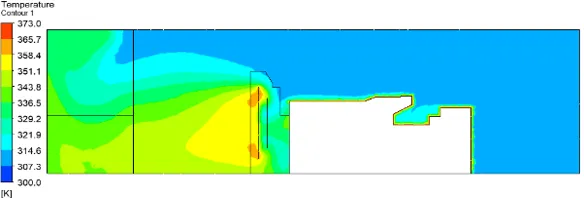
THERMAL & COOLING
Explore generator-room ventilation, temperature distribution and potential hot-air recirculation under defined operating conditions.
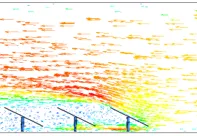
RENEWABLE ENERGY
Review wind flow and thermal behaviour around solar panel arrays and surrounding geometry using CFD simulation.
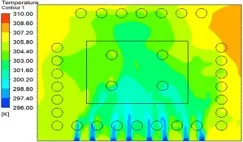
NATURAL VENTILATION
Explore airflow distribution and temperature behaviour within a prayer hall to assess natural ventilation conditions.
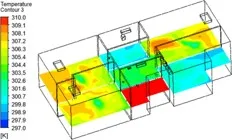
BUILDING AIRFLOW
Review natural ventilation, indoor airflow distribution and temperature variation in a residential building.
Discuss Your Project
Whether you are investigating building ventilation, HVAC airflow, equipment cooling or industrial fluid movement, the first step is to define the engineering question and available project information. Share your drawings and requirements to discuss a suitable study scope.
Frequently Asked Questions
Answers to common questions about CFD applications, project inputs, simulation timelines and engineering consultation.
CFD analysis services are used to study fluid flow, airflow, pressure distribution and heat transfer in a defined system. They can support design evaluation, troubleshooting and comparison of engineering alternatives.
HyperCurve offers CFD-related engineering services for applications involving airflow, HVAC, thermal behaviour and industrial fluid flow. Contact our team to confirm current service availability and discuss your project scope, data and objectives.
CFD analysis involves modelling and evaluating fluid flow or thermal behaviour. CFD consulting may also include defining engineering objectives, reviewing project inputs, selecting a suitable modelling approach and interpreting simulation results.
CFD consultants can help investigate airflow patterns, pressure variations, heat transfer and fluid movement. Their work can support design reviews, performance assessments and comparisons of alternative configurations, depending on the project requirements.
Potential applications include commercial buildings, HVAC systems, industrial equipment, data centres, automotive and mechanical engineering, and selected controlled environments. Suitability depends on the engineering problem and available project data.
Common inputs include CAD geometry or drawings, dimensions, material properties, operating conditions, relevant boundary conditions and a clear description of the engineering problem. Additional information may be required depending on the simulation scope.
The timeline depends on geometry complexity, physical models, mesh requirements, input quality, the number of simulation cases and reporting needs. A suitable schedule can be discussed after reviewing the project scope.
Yes. CFD analysis can visualise airflow distribution and velocity patterns to help investigate low-flow regions, recirculation and uneven air distribution. Results should be interpreted in the context of the model assumptions and available validation data.
Yes. CFD simulation can evaluate temperature distribution and heat transfer to help investigate thermal gradients and compare cooling arrangements. The physical models and required inputs depend on the application.
Yes. Alternative designs or operating conditions can be assessed under consistent assumptions to compare relevant flow, pressure and thermal performance indicators.
Yes. Geometry, boundary conditions, material properties, modelling assumptions and numerical settings can affect CFD simulation results. These factors should be reviewed and documented as part of the study.
CFD services for HVAC systems can investigate supply-air distribution, airflow patterns and temperature variations, depending on the available system details and project objectives. Contact HyperCurve to discuss your application.