01
Application-Specific Analysis
Select a suitable modelling approach based on your engineering requirements and project objectives.
HyperCurve provides CFD Analysis Services in Bangalore to assist the engineers in gaining an understanding of the movement of fluids through computing simulations. Through CFD analysis, engineers will be able to analyze the behavior of air or liquids in components, machinery, and constructed environments before making any crucial decisions.
Our CFD consultants in Bangalore may assist in the projects that need to be analyzed in terms of their ventilation, thermal performance, cooling techniques or flow behavior. The simulation analysis by ourCFD consultants in Bangalore will help you compare different designs, find possible problems and make well-informed engineering decisions. Every project has a specific scope depending on the objective of the project and the information to be delivered.
CFD Fundamentals
The term Computational Fluid Dynamics (CFD) refers to the computer simulation of fluid flow and its effects such as pressure, velocity and temperature distribution. Engineers use CFD models to analyze flow behavior, regions of recirculation and movement of heat/fluid within a geometry.
CFD is also helpful in cases where the physical testing process is costly, complicated, and cannot reveal what is going on inside the system. The quality of simulation is determined by geometry, mesh, boundary conditions, physics, and proper validation. HyperCurve provides CFD consultants in Bangalore are tailored to meet the exact engineering problem and help make the decision.
Project-Focused Approach
Experienced CFD consultants can help engineering teams evaluate fluid flow, air distribution, pressure variation, and thermal performance before making design decisions.
At HyperCurve, we begin by understanding your engineering objectives, project data, and operating conditions. Our CFD analysis approach focuses on using simulation to assess system performance and support informed engineering decisions.
01
Select a suitable modelling approach based on your engineering requirements and project objectives.
02
Investigate airflow patterns, temperature distribution and potential thermal hot spots.
03
Evaluate pressure variations, flow distribution and other relevant system parameters.
04
Compare alternative configurations under consistent simulation conditions.
05
Interpret simulation results to support engineering assessments and informed decision-making.
06
Align the study scope with the available geometry, operating conditions and project data.
From HVAC systems to data center cooling, from industrial machinery to external airflows, HyperCurve can offer you CFD consultants in Bangalore that suit your engineering needs. Our objective is to help the team in understanding the engineering issues and possible design modifications through computational simulations.
Applications
CFD modeling aids in the application of engineering and built-environment projects through the ability of the team to analyze the flow of air, fluid dynamics, pressure differences, and heat transfer. HyperCurve is a software that offers CFD analysis based on project needs.
Airflow distribution, cooling performance and potential hot spot assessment.
Indoor airflow, ventilation and thermal comfort studies.
Air distribution, temperature variations and system performance evaluation.
Fluid flow, pressure behaviour and equipment performance analysis.
External airflow and thermal behaviour around selected components.
Airflow patterns and ventilation assessment.
Our Workflow
A structured workflow helps establish the simulation objectives, prepare the model, evaluate the numerical solution and present findings according to the agreed engineering requirements.
01
Understand the engineering challenge, project goals, geometry and expected simulation outcomes.
02
Review the supplied CAD model or geometry and prepare it for CFD modelling based on the scope of the study.
03
Create a suitable computational mesh to represent the geometry and capture the flow and thermal behaviour relevant to the analysis.
04
Define the required physical models, material properties, operating conditions and boundary conditions according to the project requirements.
05
Run the CFD simulation, assess solution convergence and review relevant results such as velocity, pressure, airflow and temperature distribution.
06
Present the simulation findings through relevant visualisations and technical explanations to help the project team evaluate performance and compare design alternatives.
Simulation Platforms
Software selection should align with the physics, geometry, project data and deliverables required. The final platform depends on the project scope and confirmed software availability.
A CFD platform that may be suitable for a range of fluid-flow, airflow and heat-transfer simulation requirements.
An open-source CFD software framework that may be considered for suitable modelling and engineering simulation applications.
Project Highlights
Explore CFD case studies involving airflow, thermal management, ventilation and wind-flow engineering. These examples illustrate different applications of simulation rather than guaranteeing the same outcomes for every project.
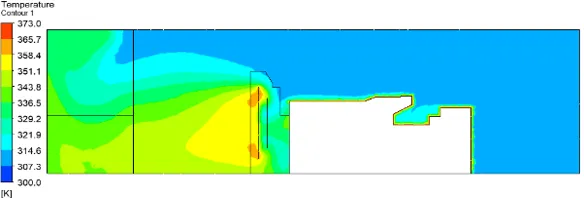
THERMAL & COOLING
Explore generator-room ventilation, temperature distribution and potential hot-air recirculation under defined operating conditions.
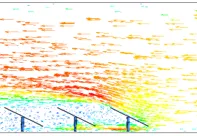
RENEWABLE ENERGY
Review wind flow and thermal behaviour around solar panel arrays and surrounding geometry using CFD simulation.
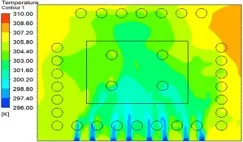
NATURAL VENTILATION
Explore airflow distribution and temperature behaviour within a prayer hall to assess natural ventilation conditions.
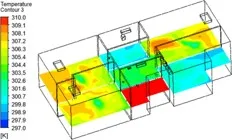
BUILDING AIRFLOW
Review natural ventilation, indoor airflow distribution and temperature variation in a residential building.
Discuss Your Project
Whether you are evaluating airflow in a building, cooling around equipment or fluid flow in an industrial application, start by defining the engineering question and available data. Share your drawings or project requirements to discuss a suitable study scope.
Engineering Capabilities
Every simulation is scoped around the engineering question, available project inputs and intended use of the results. Explore the CFD applications that may be suitable for your project.
Examine air flow distribution, air speed, and areas where stagnation may occur in the selected indoor environment. This research helps the engineering team analyze the efficiency of the ventilation system and identify any problems with the air flow.
Study supply air distribution, temperatures, and airflow patterns to help with the analysis of HVAC systems. CFD simulation helps evaluate the air distribution in commercial buildings, industrial spaces, and other indoor settings.
Examine temperature distribution, heat transfer, and thermal characteristics in the vicinity of equipment, parts, and enclosures. CFD analysis could be used to examine any possible hot spots as well as assess different cooling schemes.
Simulate airflow and heat distribution around the server racks and cooling units, along with other data center components. Based on the available information about the project, CFD modeling can be used to study possible hot spots and airflow bypass and recirculation.
Consider the flow within specified equipment, ducts, conduits and industrial plants where distribution of flow, pressure variations or velocity play an important role in their performance. This type of analysis will be customized according to the needs of each project.
Analyze airflow behavior around buildings, structures, and equipment and other geometries. The airflow simulations may prove useful to engineers in understanding patterns of wind and analyzing how other nearby geometries affect their behavior.
Compare other possible design schemes or operations under the same simulated conditions. This will enable the team behind the project to assess performance differences and possible constraints of the design scheme being considered.
Frequently Asked Questions
Answers to common questions about CFD applications, project inputs, simulation results and consultation.
CFD analysis services simulate fluid flow and related physical phenomena such as pressure, velocity, heat transfer and temperature distribution. Applications may include ventilation analysis, equipment cooling, industrial flow and engineering design evaluation.
CFD stands for Computational Fluid Dynamics. It is a numerical simulation technique used to analyse fluid movement and its interaction with surfaces, heat and other physical phenomena.
HyperCurve provides CFD analysis information and project-focused engineering services for applications involving airflow, heat transfer, fluid flow and thermal analysis. Contact our team to confirm current service availability and discuss your Bangalore project requirements.
CFD consultants can help define simulation objectives, review drawings and operating conditions, prepare the model, evaluate simulation results and document findings according to the project's engineering requirements.
CFD analysis studies a digital model under defined assumptions, while physical testing measures real-world behaviour. Both methods can complement each other. CFD is not automatically a replacement for physical testing, and validation requirements depend on the application.
Potential applications include data centres, commercial buildings, HVAC systems, industrial facilities, automotive and mechanical engineering, pharmaceutical environments and cleanrooms. Suitability depends on the specific engineering problem and available project data.
Useful inputs may include CAD geometry or drawings, dimensions, operating conditions, flow rates, fluid properties, temperatures, heat loads and the specific engineering questions to be investigated. The required information is confirmed after an initial project review.
The timeline depends on geometry complexity, physical models, input quality, the number of simulation scenarios and reporting requirements. A suitable schedule can be discussed after reviewing the project scope.
Depending on the simulation setup, results may include velocity, pressure, temperature distribution, flow paths, recirculation regions and other relevant physical quantities. Outputs are selected according to the agreed engineering objectives.
CFD can help visualise simulated airflow and temperature distribution and highlight potential hotspots or poorly ventilated regions. Findings must be interpreted alongside modelling assumptions, and validation against measurements may be appropriate.
The suitable software depends on the project requirements, physical models, deliverables and confirmed software availability. Contact HyperCurve to discuss your application and identify an appropriate simulation platform.
Contact HyperCurve through the website's contact page and share your engineering challenge, available drawings or CAD files, operating conditions and expected timeline. The project requirements can then be reviewed to discuss the possible next steps.